
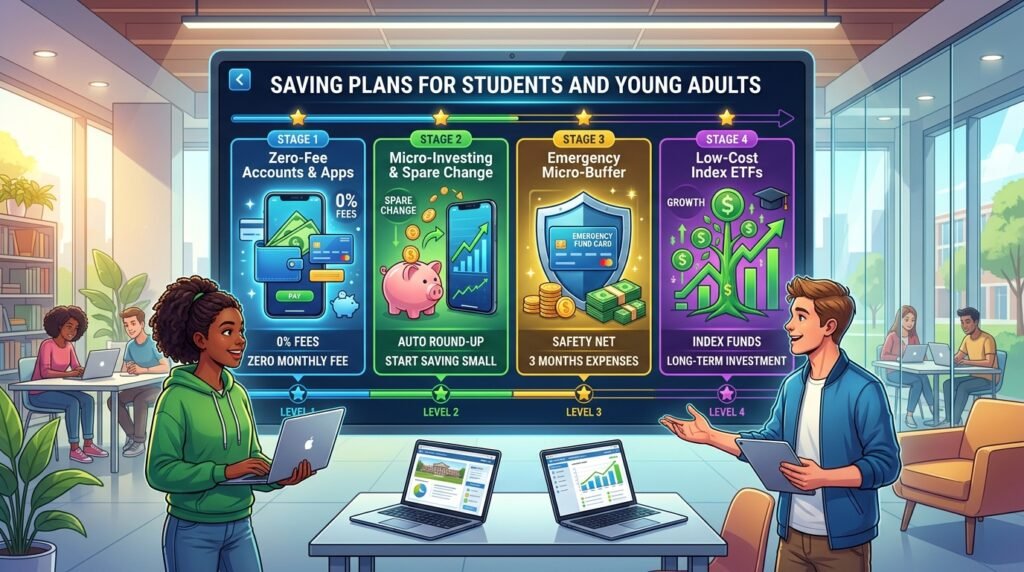
Best Saving Plans for Students and Young Adults
Saving money can be challenging when you are a student or a young adult. Between tuition fees, transportation, food, entertainment, technology, and other everyday expenses, it may seem difficult to put money aside for the future. However, developing good saving habits at a young age can make a major difference to your financial life. You do not need a large income to start saving. What matters most is creating a realistic plan, developing consistent habits, and understanding how to manage your money effectively.
The best saving plans for students and young adults are designed around limited or changing income, relatively high education and living expenses, and short- and long-term financial goals. A student may want to save for a laptop, university fees, a trip, or an emergency fund, while a young professional may be focused on building savings, paying off debt, buying a car, moving into a new home, or preparing for retirement.
Starting early gives you an important advantage. Saving small amounts regularly can create strong financial habits that continue throughout your working life. As your income grows, these habits can help you increase your savings and build a stronger financial foundation.
This guide explains the best saving plans for students and young adults, including how to create a budget, build an emergency fund, automate savings, reduce unnecessary expenses, manage debt, and make long-term financial plans.
Why Saving Money Is Important for Students and Young Adults
Developing saving habits early can help young people become more financially independent. Students often depend on parents, scholarships, part-time jobs, or limited income, making it especially important to use available money carefully.
Saving also provides financial flexibility. An unexpected expense, such as a medical bill, broken laptop, urgent travel, or transportation problem, can become a serious issue when there is no money available to cover it.
Young adults may face even more financial responsibilities after graduation. Rent, utility bills, transportation, insurance, student loans, and other expenses can quickly consume a paycheck.
Starting a saving plan before these responsibilities become larger can make the transition into adulthood easier.
Start With a Simple Student Budget
The first step toward saving money is understanding where your money goes. Students should create a simple monthly budget that includes income and expenses.
Income may come from a part-time job, allowance, scholarship, freelance work, internship, or family support. Expenses can include tuition, books, transportation, food, mobile phone bills, entertainment, subscriptions, and personal purchases.
Once you know your income and expenses, determine how much money is available for savings.
A student with a limited income may only be able to save a small amount each month. That is completely acceptable. The purpose of creating a budget is to build a sustainable habit rather than trying to save an unrealistic amount.
Build an Emergency Fund
An emergency fund is one of the most useful saving plans for students and young adults. It is money set aside for unexpected expenses rather than regular spending.
Students can start with a small emergency savings target. Even a modest amount can provide protection when an unexpected expense occurs.
As income increases, the emergency fund can gradually become larger.
Young adults who are working full-time should consider building a more substantial emergency fund based on their monthly essential expenses and personal circumstances.
Keep emergency savings somewhere relatively safe and accessible. The purpose of this money is financial protection, so it should not normally be placed in investments that could lose significant value when you suddenly need the funds.
Use Automatic Savings
Automatic savings can make saving money much easier. Instead of waiting until the end of the month to see what is left, set up a recurring transfer into a separate savings account.
For example, a student who receives a monthly allowance or salary can automatically transfer a fixed amount into savings shortly after receiving the money.
Young adults can use the same strategy with their salary. Automating savings reduces the temptation to spend the money first.
Even a small automatic transfer can become meaningful when repeated consistently.
Create Separate Savings Goals
One of the best saving strategies for young people is to give every savings goal a purpose.
Instead of putting all your savings into one general account, consider separating money mentally or physically according to its purpose.
You might have a fund for education, emergencies, travel, technology, a vehicle, or a future home.
Having separate goals makes it easier to understand why you are saving and can increase motivation.
For example, seeing a balance labeled “Laptop Fund” may encourage you to continue saving because the money has a clear purpose.
Save for Education Expenses
Education can involve significant expenses beyond tuition. Students may need money for books, software, transportation, accommodation, equipment, examination fees, and other costs.
Creating a dedicated education savings plan can help reduce financial pressure.
If you receive financial support from your family, scholarship income, or part-time earnings, consider setting aside a portion specifically for education-related expenses.
Planning ahead can also prevent you from relying heavily on credit or borrowing when an academic expense appears unexpectedly.
Use the Pay-Yourself-First Method
Paying yourself first means setting aside your savings before spending money on discretionary expenses.
For example, if you receive $500 from a part-time job, you might immediately move $50 into your savings account before spending the remaining amount.
The percentage does not have to be the same for everyone. The important idea is to make saving a priority.
Young adults can continue this habit as their income increases. If your salary rises, consider increasing the amount you save rather than spending the entire increase.
Follow a Flexible Budgeting Method
There is no single budget that works for every student or young adult. Your financial situation may change from month to month.
Some students have fixed monthly allowances, while others work irregular hours. Young freelancers may also have variable income.
A flexible budget should account for these changes.
Instead of creating a budget that assumes every month will be identical, estimate your essential expenses and create savings targets that can adjust according to income.
During months when you earn more, you can increase savings. During difficult months, you may reduce discretionary spending and maintain essential savings contributions.
Reduce Unnecessary Student Expenses
Students can often find savings opportunities by reviewing everyday spending.
Food delivery, frequent coffee purchases, entertainment subscriptions, online shopping, and impulse purchases can add up over time.
The goal is not to eliminate everything enjoyable. Instead, identify expenses that do not provide enough value compared with their cost.
For example, preparing meals at home several times a week may reduce food expenses while still allowing occasional restaurant visits.
Small changes can make a meaningful difference when maintained consistently.
Take Advantage of Student Discounts
Students should look for legitimate student discounts whenever they are available.
Technology companies, transportation providers, software services, entertainment platforms, restaurants, and educational services may offer student pricing in some markets.
Using discounts can reduce the cost of products and services you already need.
However, a discount is not automatically a saving if it encourages you to purchase something you did not need. Always consider the total cost before buying.
Control Impulse Purchases
Impulse spending is a common obstacle for young people. Social media advertising, online shopping, and limited-time promotions can create pressure to spend immediately.
One useful strategy is to introduce a waiting period before buying non-essential items.
For smaller purchases, you could wait 24 hours. For more expensive purchases, consider waiting several days.
During that time, ask whether the purchase is necessary, whether it fits your budget, and whether it will interfere with an important savings goal.
This simple habit can help reduce unnecessary spending.
Save Money From Part-Time Jobs
Part-time work can provide students with an opportunity to develop both income and financial discipline.
Instead of spending all earnings, decide in advance how much will go toward savings.
For example, you might save a portion of every paycheck and use the rest for education, transportation, food, and personal expenses.
The exact percentage should depend on your income and responsibilities.
The important part is creating a consistent system.
Consider Freelancing and Side Income
Young adults may have opportunities to earn additional money through freelancing, tutoring, digital services, content creation, online work, or other legitimate activities.
Additional income can accelerate financial goals, especially when a large portion is directed toward savings.
However, side income should be managed carefully. Keep records of earnings and expenses, and understand any tax or legal obligations that apply to your situation.
A useful strategy is to decide in advance how additional income will be divided between savings, expenses, debt repayment, and personal spending.
Avoid Lifestyle Inflation
Lifestyle inflation occurs when spending increases as income increases.
A student who starts earning a full-time salary after graduation may suddenly have more money available. It can be tempting to upgrade everything immediately, including housing, transportation, entertainment, clothing, and technology.
Some lifestyle improvements are reasonable, but increasing every expense at the same time can prevent savings from growing.
Consider keeping some of your previous spending habits while directing part of your additional income toward savings and long-term financial goals.
Start Saving for Retirement Early
Retirement may seem very far away when you are a student or young adult. However, starting early can provide more time for savings and investment growth.
Depending on your country and employment situation, retirement options may include employer-sponsored plans, individual retirement accounts, pension programs, or other long-term investment products.
The appropriate option depends on local rules, available financial products, taxes, fees, and your personal circumstances.
The key lesson is that long-term financial planning can begin much earlier than many people expect.
Understand the Power of Compound Growth
Compound growth occurs when earnings are added to your balance and future earnings can then be generated on the larger amount.
Time can therefore be an important factor in long-term wealth building.
For example, someone who begins regularly saving and investing at a young age may have more time for potential growth than someone who starts much later.
However, investment returns are not guaranteed, and investments can lose value. Students and young adults should understand the risks before choosing investment products.
Choose the Right Savings Account
The right savings account depends on your financial goals and how quickly you may need access to the money.
For short-term savings and emergency funds, accessibility and safety are usually important considerations.
Some savings products offer higher interest rates or other benefits, while others may have withdrawal restrictions, minimum balances, or fees.
Before opening an account, compare the interest rate, fees, withdrawal conditions, minimum balance requirements, and other terms.
Avoid choosing an account based solely on the advertised interest rate.
Manage Student and Personal Debt
Debt can have a major impact on a young person’s ability to save.
Student loans, credit card balances, personal loans, and other forms of debt may require regular payments and interest.
If you have high-interest debt, consider making debt repayment an important part of your financial plan while maintaining appropriate emergency savings.
Avoid using credit cards as a substitute for savings whenever possible. Borrowing can make a financial emergency more expensive because interest can increase the total cost.
Understanding how interest works can help young adults make more informed borrowing decisions.
Use Unexpected Money Wisely
Young people may occasionally receive unexpected money from gifts, bonuses, refunds, scholarships, or temporary work.
Instead of spending the entire amount immediately, consider dividing it between savings and personal spending.
For example, you might use part of a bonus to build your emergency fund while keeping some money for something enjoyable.
This approach allows you to benefit from the additional income without losing the opportunity to strengthen your financial position.
Create a Savings Challenge
Saving money can become more motivating when it feels like a measurable challenge.
A student might set a goal to save a certain amount within three months. Another person might gradually increase their weekly savings contribution.
The purpose of a savings challenge is not to create financial stress. It is to make saving more engaging and encourage consistency.
Choose a target that is realistic based on your income and expenses.
Track Your Progress
Tracking your savings can help you understand whether your plan is working.
You can use a spreadsheet, budgeting application, banking application, or simple notebook.
Record how much you save each month and compare it with your target.
If you regularly fall short, examine your budget and identify the reason. Your savings target may be unrealistic, your expenses may have changed, or you may need to adjust your spending habits.
Tracking allows you to make informed adjustments.
Avoid Comparing Your Finances With Others
Social media can make it appear that everyone else is spending more, traveling more, or buying expensive products.
Comparing your financial situation with someone else’s can lead to unnecessary spending.
Remember that people have different incomes, family circumstances, financial obligations, and priorities.
Focus on your own financial goals instead.
A successful saving plan is one that improves your financial position relative to where you started.
Create Short-Term and Long-Term Goals
Students and young adults should consider both short-term and long-term financial goals.
Short-term goals may include saving for books, a laptop, a trip, or an emergency expense.
Medium-term goals might include buying a car, moving to a new apartment, or paying for additional education.
Long-term goals can include buying a home, building retirement savings, starting a business, or creating long-term financial independence.
Having multiple goals can help you create a balanced saving strategy.
Review Your Saving Plan Regularly
Your financial situation will change as you move from student life into employment and adulthood.
When you graduate, receive a new job, move to a new city, or experience a major change in expenses, review your saving plan.
A plan that worked during university may not be appropriate once you start earning a full-time income.
Likewise, a plan created when you were single may need to change after marriage or other major life events.
Regular reviews keep your saving strategy relevant.
Common Saving Mistakes Students and Young Adults Should Avoid
One common mistake is waiting until you earn a high income before starting to save. Saving habits are often more important than the amount saved at the beginning.
Another mistake is creating an unrealistic budget. If your plan leaves no room for normal personal spending, you may eventually abandon it.
Ignoring small expenses can also be problematic. Individual purchases may appear insignificant, but recurring spending can add up over time.
Another mistake is failing to maintain emergency savings. Without an emergency fund, an unexpected expense can force you to borrow money or stop saving.
Finally, avoid chasing quick financial gains without understanding the risks. Be cautious of promises of guaranteed high returns or opportunities that pressure you to send money quickly.
Best Saving Plans for Different Young Adults
The best saving plan depends on your circumstances. A college student with a small allowance may focus on creating a basic emergency fund and saving for education-related expenses.
A student with part-time employment may divide each paycheck between spending and savings while building a small financial cushion.
A recent graduate with a full-time job may focus on creating an emergency fund, managing debt, saving for major purchases, and beginning long-term retirement planning.
A young entrepreneur or freelancer with irregular income may need a larger emergency reserve and a flexible savings strategy because monthly earnings can fluctuate.
The important principle is to customize your saving plan rather than copying someone else’s financial strategy.
How to Stay Motivated to Save Money
Saving money can feel difficult when the reward is far in the future. One way to stay motivated is to connect every savings contribution with a specific goal.
Instead of thinking, “I am putting money into an account,” think, “This contribution is helping me build my emergency fund,” or “This money is helping me pay for my education.”
Visual progress can also help. Tracking your balance and watching it increase can make the process more rewarding.
You can also set milestones. Reaching your first savings target can encourage you to create a larger goal.
Final Thoughts
The best saving plans for students and young adults are not necessarily complicated. They are based on realistic goals, consistent habits, careful budgeting, and a clear understanding of personal finances.
Start by tracking your income and expenses. Create specific financial goals and determine how much you can realistically save each month. Automate your savings whenever possible and keep money for different goals separate or clearly organized.
Building an emergency fund should be an important priority because unexpected expenses can occur at any stage of life. At the same time, learn to control unnecessary spending, avoid impulse purchases, and take advantage of legitimate discounts.
As your income increases, avoid allowing lifestyle expenses to increase at the same rate. Direct part of your additional income toward savings, debt repayment, and long-term financial goals.
Students and young adults have a valuable advantage: time. Starting with small amounts today can help create strong financial habits for the future. The amount you save at the beginning may not be large, but consistency can matter more than the starting amount.
A good saving plan should also be flexible. Your income, expenses, responsibilities, and goals will change throughout your life. Review your strategy regularly and make adjustments when necessary.
Ultimately, successful personal finance is not about never spending money. It is about making intentional decisions about where your money goes. By creating a practical saving plan, controlling unnecessary expenses, building an emergency fund, and developing consistent financial habits, students and young adults can take meaningful steps toward greater financial security and independence.